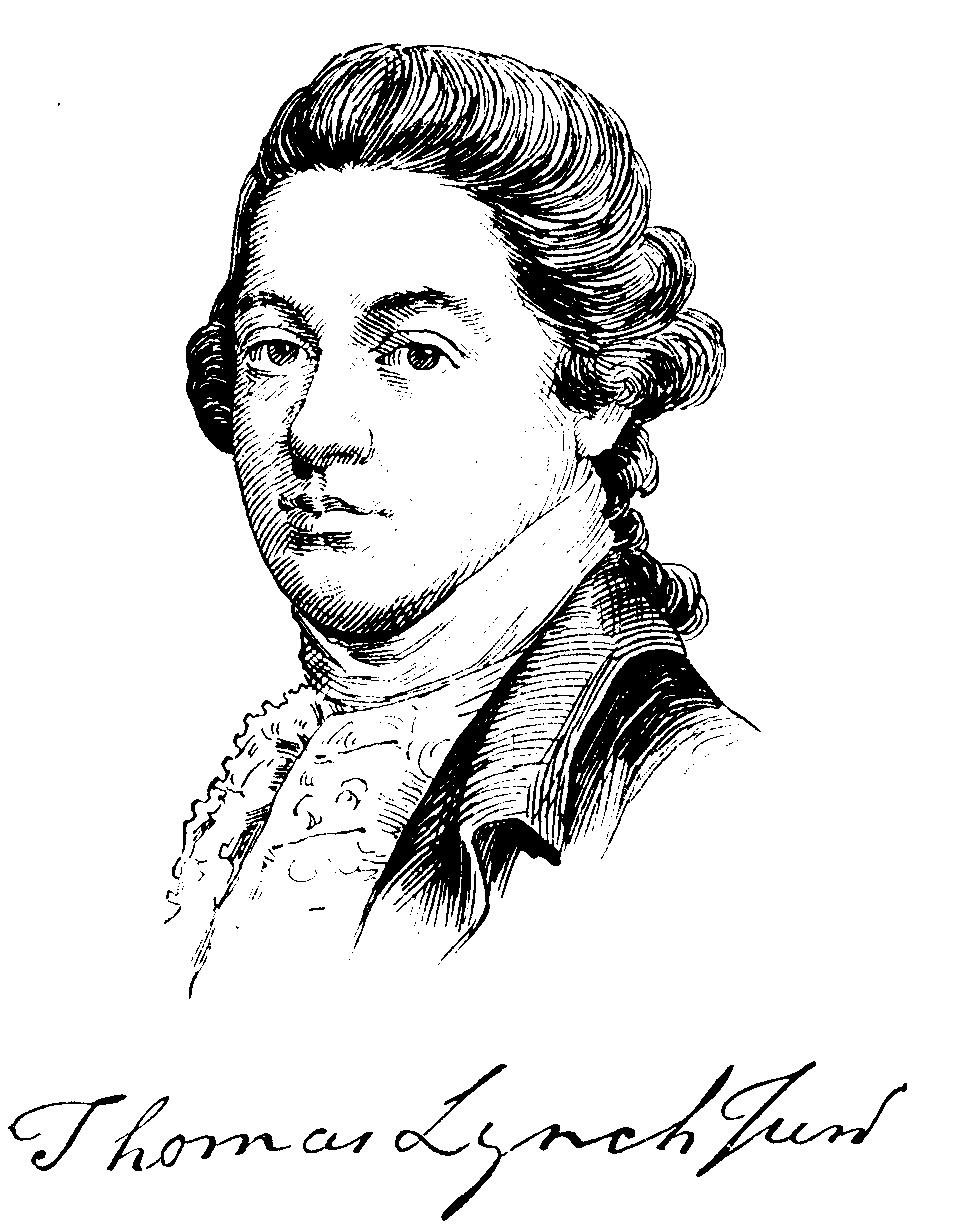
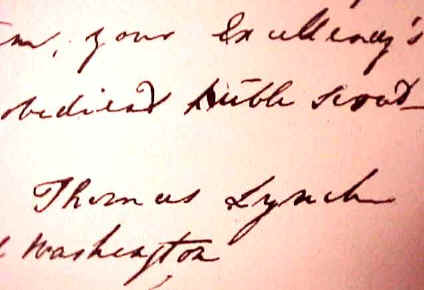
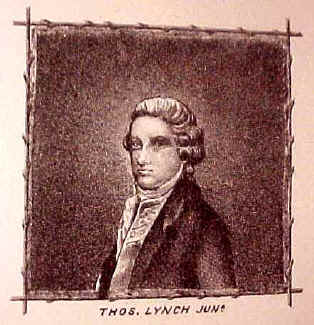
THOMAS LYNCH, JR - Signer of the Declartion of Independence Biography by
Appleton's edited by Stanley L. Klos
Thomas Lynch
Signer of the Declaration of Independence
THOMAS LYNCH, JR. was born on August 5, 1749 in
Prince George's Parish, Winyaw, South Carolina. A fourth generation American,
Thomas was the only son of Thomas and Elizabeth Allston Lynch, wealthy planters.
Young
Thomas was sent at the age of twelve to England, where he was educated at Eton
college and Cambridge university and studied law in the Temple, London. He
returned home in 1772, before completing his courses, having decided against the
legal profession. Instead, he settled down on Peach Tree plantation on the North
Santee, which was given to him by his father, and he married Elizabeth Shubrick. He
devoted himself to cultivating the plantation and took part in the public
discussions of colonial grievances. He was elected to local public office at an
early age, through his father's influence.
At the
outbreak of the Revolution, Lynch was commissioned as captain of the first
regiment of South Carolina. While raising his company he contracted swamp fever
that left him a partial invalid for the rest of his life.
During his
military service, Lynch's father, who was a delegate to the second continental
congress, was stricken with paralysis and young Lynch had been unable to obtain
from Col. Christopher Gadsden a leave of absence. However, his connection with
the regiment was severed soon afterward by his unanimous election to be his
father's successor.
On his
arrival in Philadelphia, young Lynch took his seat in the congress of 1776, and
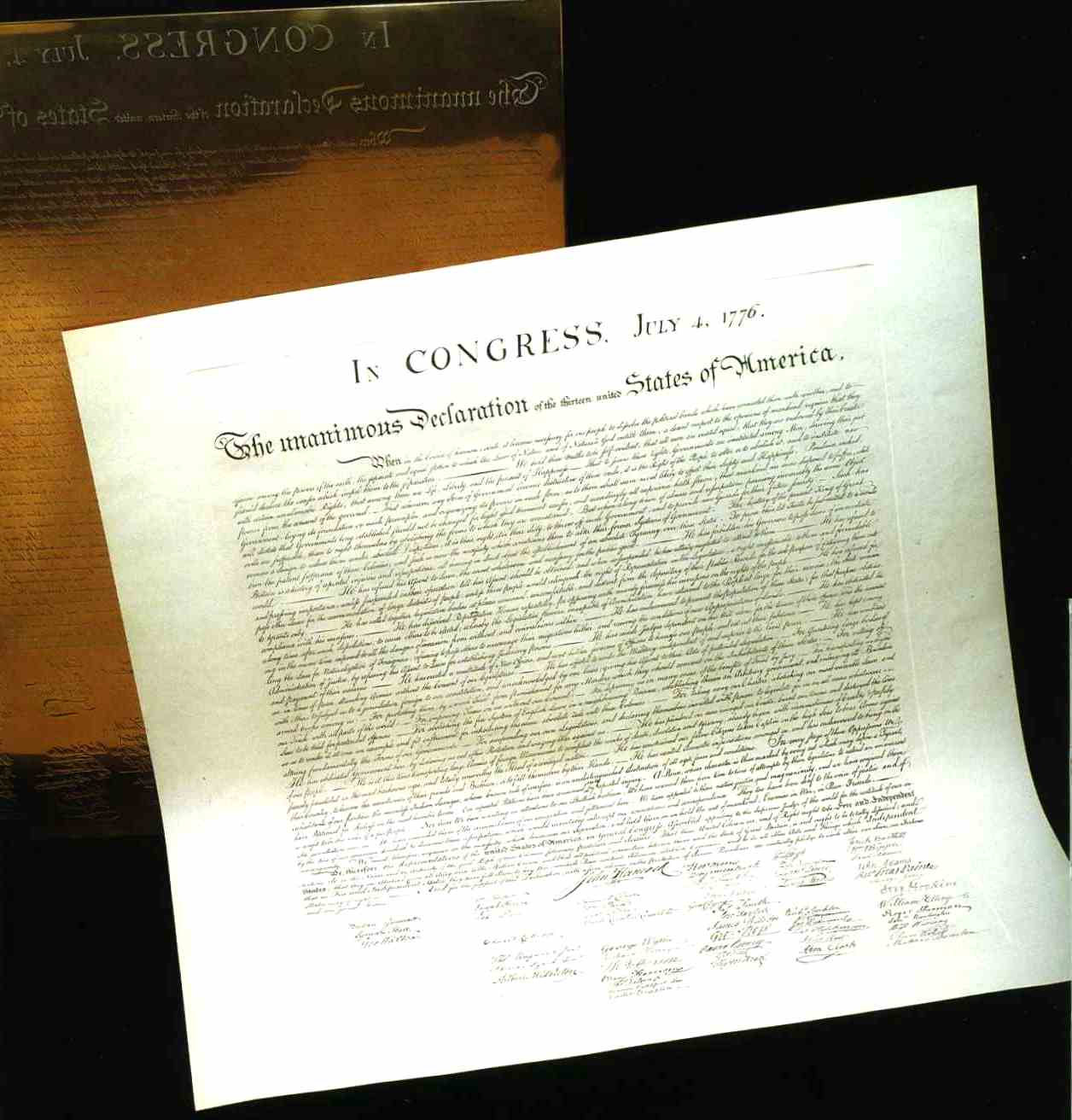
was determined to stay long enough to help adopt and sign the Declaration of
Independence. He impressed his colleagues with both his earnestness and
eloquence. One of his last public acts was to affix his signature to the
Declaration.
In
the fall of 1776, his health compelled him to return to South Carolina with his
father. The elder Lynch died en route and his own health grew worse under these
trying circumstances. With therapeutic hope, he and his wife embarked in 1779
for St. Eustatius, in the West Indies, where they expected to take passage in
some neutral ship for the south of France. The vessel, in which they sailed on
the first leg of their journey, was seen for the last time when it was a few
days out at sea, and was presumed to have been lost in a storm.
Unauthorized Site:
This site and its contents are not affiliated, connected,
associated with or authorized by the individual, family,
friends, or trademarked entities utilizing any part or
the subject's entire name. Any official or affiliated
sites that are related to this subject will be hyper
linked below upon submission
and Evisum, Inc. review.
Please join us in our mission to incorporate The Congressional Evolution of the United States of America discovery-based curriculum into the classroom of every primary and secondary school in the United States of America by July 2, 2026, the nation’s 250th birthday. , the United States of America: We The
People. Click Here